Beware the Blister Beetle!
I was walking through the Worcester forest on Tetasset Ridge one summer day when I saw a very colorful insect friend starting to burrow into the ground. Curious, I took a little stick and prodded it a bit to back out so I could see it. It was an iridescent, metallic-looking blue and black color, and was pretty big for a New England bug at about an inch long. After photographing it, I let it go on its way.
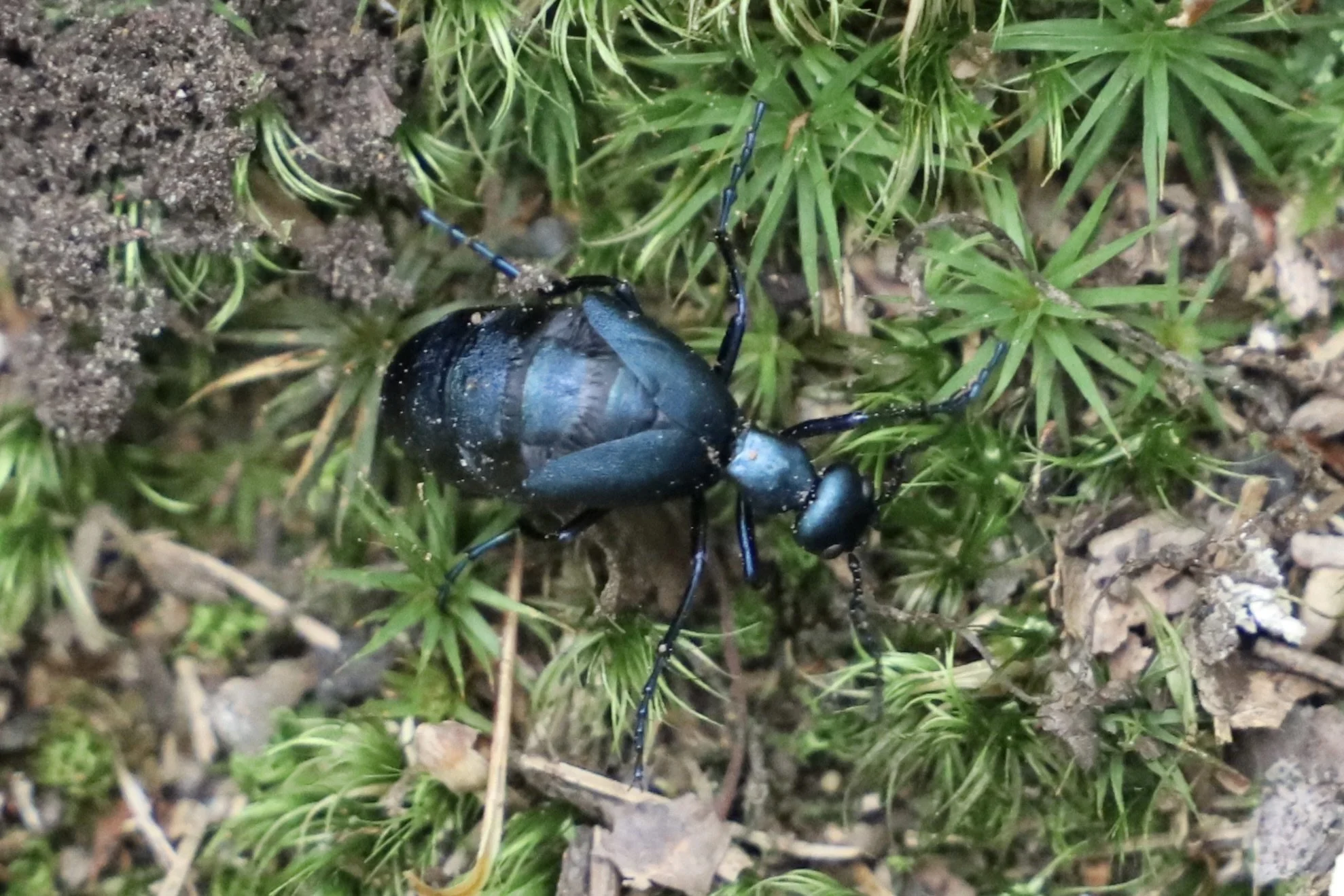
Photo by Melanie Meadors
Identifying the insect was pretty easy. Its hind wings seemed to be underdeveloped or vestigial, meaning it couldn't fly. Between that and the color, I ascertained it was Meloe angusticollis, the short-winged blister beetle.
Blister beetles get their name because they secrete a type of hemolymph, like insect blood, that contains an oily toxic called canthardin. When they feel threatened or provoked, these beetles let this stuff ooze from their joints, and it causes blistering on the skin of whatever is touching it. Not only does it irritate skin, but just a 100 mg drop can be lethal to a human.
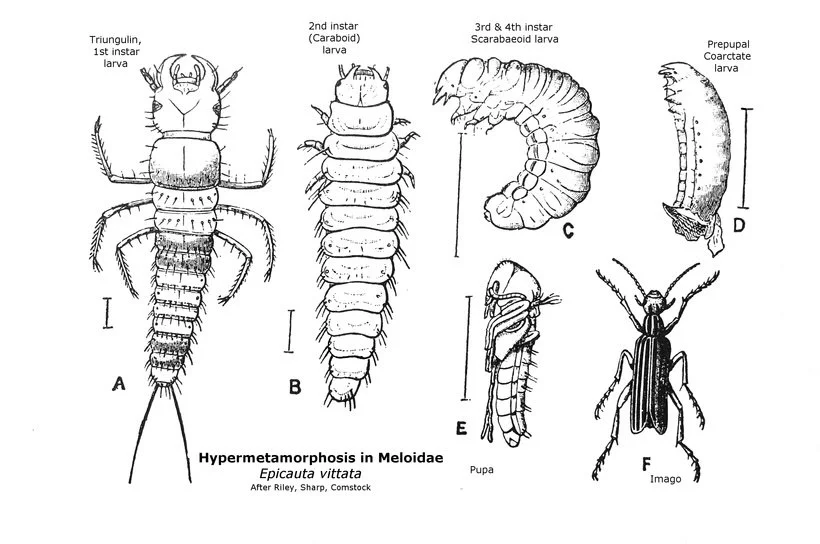
Meloe angusticollis goes through what is called a hypermetamorphic life cycle. This means that its larval stage looks very different from the adult form. The larva is very mobile, and latches on to bees, hitching rides with them to their nests, where the Meloe larva will feed on eggs and bee larvae. As time passes, they will eat and eat, become more sluggish and less mobile the more they eat and grow. They will spend the winter like this, and then pupate in the spring. They emerge as adults, who will then spend the spring and early summer looking for mates and laying eggs.
Below is an example of a blister beetle's multi-stage larval form. While this is a different type of blister beetle from the short-winged, the stages are the same. Each form of the larva is called an "instar."
Meloe angusticollis is not the only animal that benefits from their poison as a defense mechanism. Nuthatches, small gray and white birds that can hop up and down the trunks of trees like woodpeckers, have been seen smearing the bodies of blister beetles around the entrances of their nests to keep predators away.
There are different species of blister beetles around the world. The toxin of one species has famously been used as an aphrodisiac in Europe, called the Spanish Fly. George Washington's doctors, when he was very ill at the end of his life, bled him and put this poison at the wound site, because it was thought to draw out toxins from the blood. Some historians think this coupled with the loss of blood and his infected throat led to his death.
While Meloe angusticollis seems to have formidable defenses, it does have natural predators. Another type of beetle called a fire-colored beetle, has been seen crawling on and even eating the forewings of the blister beetle.
Next time you are in the summer forest, keep an eye out for these big guys, but don't touch. And whatever you do, don't give in to any urges to snack on Meloe angusticollis. It might be the last thing you ever eat!